

📋 Table of Contents
- Why 2026 is a Turning Point for Affiliate Marketers
- The State of Affiliate Marketing in 2026
- Top 6 Trends Shaping Affiliate Marketing
- What’s Actually Working for Affiliate Bloggers
- ⭐ My #1 Hosting Pick: Kinsta
- ⭐ My #1 SEO Plugin: RankMath
- Common Mistakes to Avoid
- Your Affiliate Marketing Toolkit for 2026
- Conclusion: Start Smart, Stay Consistent
1. Why 2026 is a Turning Point for Affiliate Marketers
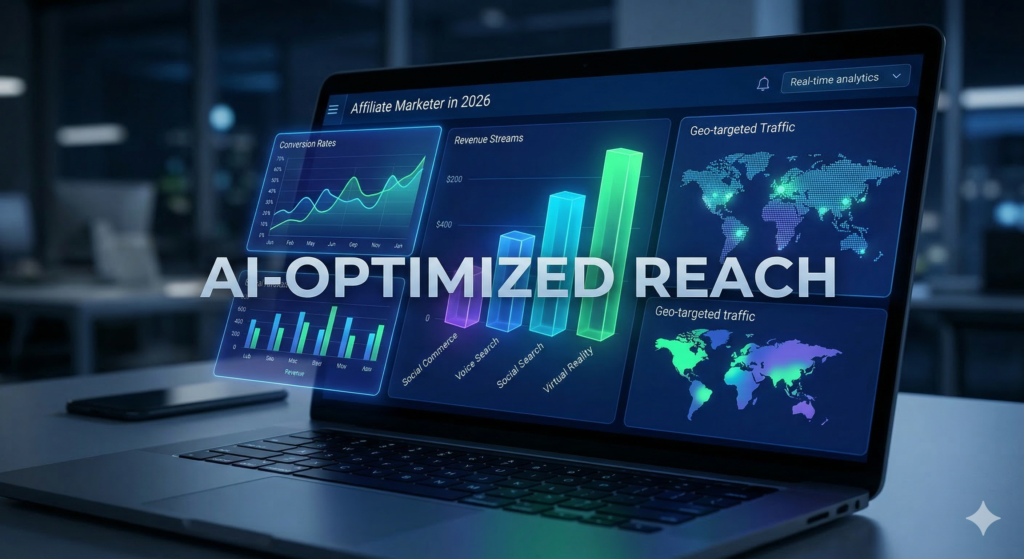
Affiliate marketing isn’t what it was just 12 months ago. AI has rewritten how we create content. Search engines are evolving into answer engines. And the old playbook of “write a review, drop a link, collect commission” is running out of steam fast.
But here’s the flip side — for creators who adapt, 2026 is one of the most exciting years ever to be in affiliate marketing. The market is bigger than ever, the tools are smarter than ever, and the opportunity to build a real, recurring income from a niche blog or content channel has never been more real.
I run DigiSparkle.in, a digital marketing blog where I share insights on SEO, hosting, and content strategy. I’m an active affiliate for Kinsta (managed WordPress hosting) and RankMath (the smartest SEO plugin on WordPress). In this guide, I’m going to break down exactly what’s working, what’s dead, and what tools will help you win in 2026.
2. The State of Affiliate Marketing in 2026
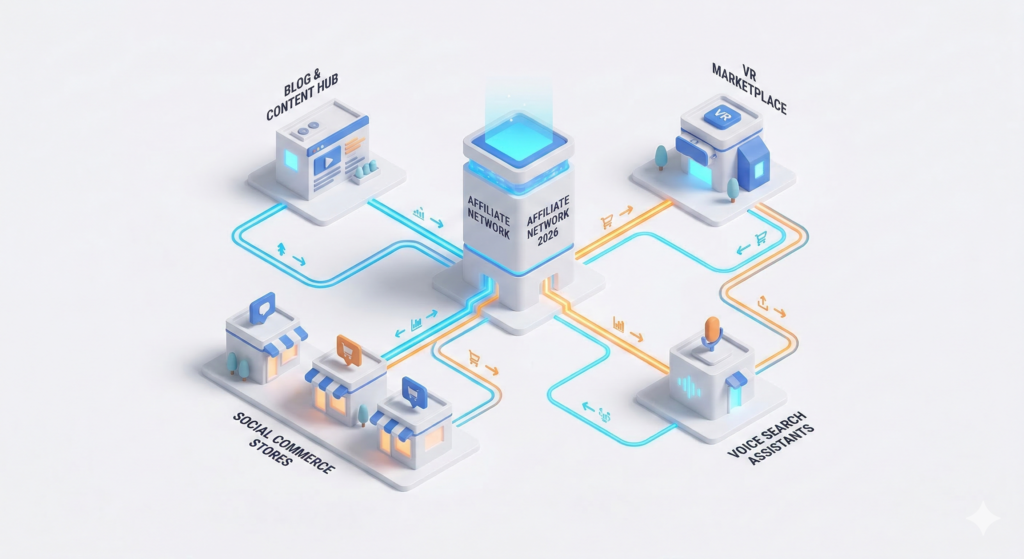
Let’s start with some perspective. Affiliate marketing is no longer a side hustle trick — it’s a multi-billion dollar industry embedded into the global economy.
$18.5B — Current global affiliate industry value
$31.7B — Projected value by 2031
16% — Of total ecommerce sales driven by affiliates
90%+ — Of ecommerce businesses adopting affiliate programs by 2026
US affiliate marketing spend is projected to reach $13.2 billion by 2026, growing approximately 10% over 2025. This growth is being driven by a few forces: the explosion of creator content, the death of traditional advertising (thanks to ad blockers and banner blindness), and the rise of performance-based marketing that brands actually trust.
In other words — if brands are shifting budget toward affiliates, there’s never been a better time to position yourself as a trusted voice in your niche.
3. Top 6 Trends Shaping Affiliate Marketing in 2026
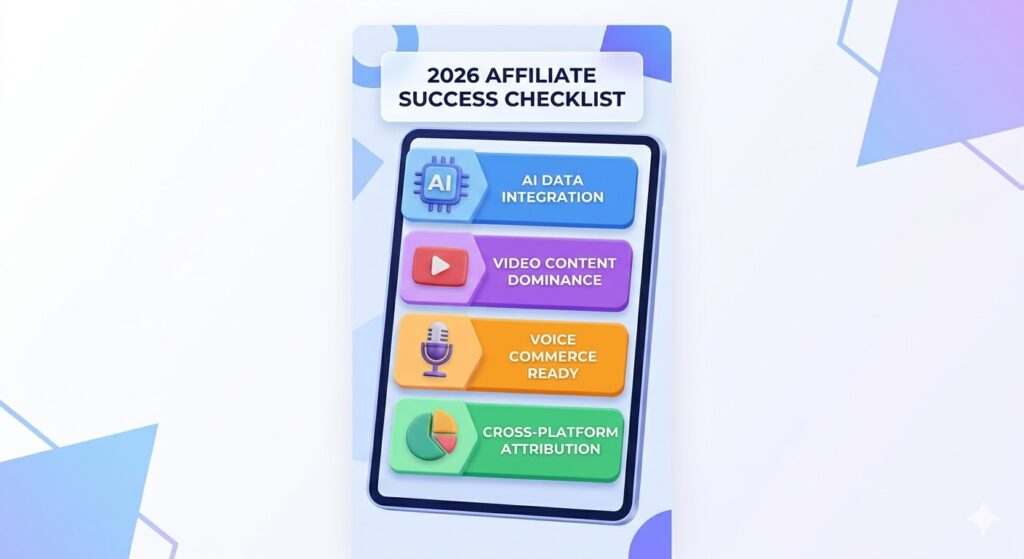
Here are the forces you need to understand — and build your strategy around — right now.
Trend 1
🤖 AI is Now Your Co-Pilot (Not Your Replacement)
According to recent data, 78% of affiliate marketers now use AI content tools — not just for writing, but for predicting trending products, identifying micro-niches before they saturate, and forecasting partner performance. The real differentiator in 2026 isn’t whether you use AI — it’s how intelligently you use it. The average marketer uses AI to write faster. The elite marketer uses AI to think sharper. Use it to find keyword gaps, simulate reader intent, and personalise outreach at scale.
Trend 2
🔍 GEO is the New SEO (Generative Engine Optimisation)
Google’s AI Overviews, ChatGPT Search, Perplexity, and Gemini are now answering questions before users ever click a link. This is called Generative Engine Optimisation (GEO) — the art of making sure your content is the one AI tools cite and recommend. Data shows that older, authoritative evergreen content (6+ months old) with genuine expertise is far more likely to be cited in AI summaries. This means your affiliate blog posts need to be actually useful, richly structured with schema markup, and written with real human depth. Cookie-cutter content won’t cut it anymore.
Trend 3
📱 Mobile-First UX is Non-Negotiable
The majority of affiliate link clicks now happen on smartphones. If your site loads slowly, your buttons are too small to tap, or your affiliate product pages aren’t mobile-optimised, you’re losing commissions every single day. Fast-loading pages, simple navigation, and one-click checkout flows are now baseline requirements — not nice-to-haves. This is one of the biggest reasons I recommend Kinsta for hosting (more on that below).
Trend 4
🎥 Short-Form Video & Live Shopping
Instagram Reels, YouTube Shorts, and live shopping streams are becoming powerful affiliate channels. Livestream shopping is forecast to grow 36% year-over-year in North America alone, and affiliate tracking is now embedded directly into live sessions via tagged products and promo codes. If you haven’t already, start pairing your blog content with short video summaries — even simple screen-recorded tutorials can drive enormous traffic and trust.
Trend 5
🏆 Niche Authority Beats Big Audiences
Here’s the truth that most beginners miss: an affiliate with 5,000 highly engaged followers in a specific niche often drives more qualified conversions than one with 50,000 general followers. In 2026, trust and relevance trump reach. Go deep, not wide. Own a specific problem — like “managed WordPress hosting for agencies” or “SEO tools for bloggers” — and become the definitive resource for that audience.
Trend 6
🔒 Privacy-First Tracking
Cookie-based tracking is on its way out. Over 70% of platforms are now moving toward privacy-compliant, server-side tracking solutions to meet GDPR, CCPA, and evolving browser restrictions. If you rely on affiliate programs that still use third-party cookies, it’s time to audit your setup. Look for affiliate programs that use server-side attribution, first-party data integrations, or promo code tracking as backup.
4. What’s Actually Working for Affiliate Bloggers Right Now
Forget the vague advice. Here’s what genuinely converts in 2026:
- Deep-dive reviews over listicles: A 3,000-word honest review of one tool outperforms a “10 Best Tools” roundup every time. Readers want depth and real experience, not recycled spec sheets.
- Head-to-head comparison posts: “Tool A vs Tool B” articles attract buyers who are almost ready to decide — this is some of the highest-converting content you can produce. (Think: “Kinsta vs Cloudways” or “RankMath vs Yoast”)
- Tutorial content that naturally integrates links: “How to Set Up WordPress on Kinsta in 10 Minutes” is infinitely more useful — and clickable — than a generic “Kinsta Review.”
- Email newsletters as owned traffic: Google updates can wipe out your organic traffic overnight. Building an email list means you always have a direct line to your readers, completely independent of any algorithm.
- Alternative traffic diversification: Pinterest, LinkedIn newsletters, YouTube, and Quora are all viable affiliate traffic channels that are often overlooked by bloggers. Don’t put all your eggs in the Google basket.
💡 Pro Tip: Add a “Last Updated” date prominently on your posts and keep them genuinely fresh. AI search tools heavily favour recently updated, authoritative content — and so does Google.
5. ⭐ My #1 Hosting Recommendation: Kinsta
Kinsta — Premium Managed WordPress Hosting
If you’re building an affiliate blog seriously, your hosting is the single most important infrastructure decision you’ll make. I personally host DigiSparkle.in on Kinsta, and the difference in speed, uptime, and support is night and day compared to shared hosting.
- Powered by Google Cloud Platform (C2 machines) — the same infrastructure Google uses itself
- Edge caching via Cloudflare integration built-in — millisecond load times globally
- 99.9% uptime SLA — your affiliate links never go down during peak traffic
- Free site migrations — their team moves your site for you, risk-free
- 24/7 expert WordPress support — not generic helpdesk, but actual WordPress engineers
- Generous affiliate programme — recurring commissions that grow with your referrals
For bloggers, agencies, WooCommerce stores, or anyone who takes their site performance seriously — Kinsta is the answer.Try Kinsta — Fast WordPress Hosting →
💡 Content Idea: Write a dedicated “Kinsta Review 2026” post and an “Is Kinsta Worth It?” FAQ post. Link both from this article. These comparison searches have massive buyer intent.
6. ⭐ My #1 SEO Plugin: RankMath
RankMath — The Smartest SEO Plugin for WordPress
Remember Trend #2 — GEO is the new SEO? RankMath is the plugin that makes this strategy actionable. I’ve been using RankMath on DigiSparkle.in and it’s genuinely the most powerful SEO tool I’ve ever used at this price point.
- Content AI: Analyses top-ranking pages and tells you exactly what keywords, headings, and entities to include
- Schema Markup Builder: Add FAQ, HowTo, Review, and Article schema with one click — critical for AI search citations
- Advanced SEO Analysis: Real-time on-page scoring with actionable improvement suggestions
- Rank Tracker: Monitor your keyword positions directly in WordPress
- Local SEO & WooCommerce SEO modules built right in
- Automatic XML sitemaps, Open Graph tags, and canonical URL management
If you want your affiliate blog to show up in both Google and AI search results in 2026, RankMath is not optional — it’s essential.Get RankMath — Optimise Your Blog →
💡 Content Idea: A “RankMath vs Yoast SEO 2026” comparison post is one of the highest-traffic affiliate content pieces you can create. This keyword has enormous search volume and clear buyer intent.
7. Common Mistakes Affiliate Marketers Make in 2026
Learning what not to do is just as valuable. Here are the most common mistakes I see — and how to avoid them:
❌
Relying solely on SEO traffic. One Google core update can wipe out months of work. Diversify into email, Pinterest, LinkedIn, and YouTube so you own your audience across multiple channels.
❌
Promoting too many products without depth. Recommending 20 tools shallowly earns far less trust and commission than genuinely knowing 3–5 products inside out. Go deep on what you actually use.
❌
Ignoring mobile UX. Most of your readers are on their phones. If your site is slow or cluttered on mobile, your conversion rate is dead in the water — regardless of how good your content is.
❌
Not disclosing affiliate links. In most countries, affiliate disclosures are legally required (FTC in the US, ASA in the UK, similar rules in India). More importantly, transparency builds trust — and trust converts.
❌
Writing for search bots, not humans. AI-generated filler content stuffed with keywords is being actively penalised by Google’s Helpful Content system. Write for real people solving real problems first — rankings will follow.
❌
Neglecting content freshness. Outdated information loses trust fast. Schedule quarterly reviews of your top affiliate posts to update screenshots, pricing, and feature comparisons.
8. Your Affiliate Marketing Toolkit for 2026
Here’s a clean, no-fluff overview of every tool you need to run a serious affiliate blog:
| Purpose | Tool | Why It Matters | My Recommendation |
|---|---|---|---|
| Hosting | Kinsta | Speed, uptime, and scalability | ✅ Affiliate |
| SEO Plugin | RankMath | On-page SEO, schema, AI optimisation | ✅ Affiliate |
| Keyword Research | Ahrefs / Semrush | Find low-competition, high-intent keywords | Paid (worth it) |
| Analytics | Google Search Console + GA4 | Track traffic, clicks, conversions | Free |
| Email Marketing | ConvertKit / Mailchimp | Own your audience beyond Google | Free tier available |
| AI Writing Assistant | Claude / ChatGPT | Faster drafting, outline generation | Use as co-pilot, not author |
| Link Management | ThirstyAffiliates / Pretty Links | Cloak links, track clicks, manage redirects | Recommended |
| Design | Canva | Blog post graphics, social images | Free tier available |
9. Conclusion — Start Smart, Stay Consistent
Affiliate marketing in 2026 rewards the creators who combine genuine expertise with the right tools and consistent publishing. The era of quick wins and thin content is over. But the era of niche authority, honest recommendations, and well-optimised content has never been more powerful.
Here’s your action plan from this post:
- Pick your niche and go deep — don’t scatter across topics
- Build your site on fast, reliable hosting (Kinsta is my pick)
- Optimise every post for both Google and AI search with RankMath
- Start an email list from day one — it’s your most valuable asset
- Write content that genuinely helps — long-form reviews, comparisons, tutorials
- Diversify your traffic sources beyond just SEO
Ready to Build Your Affiliate Blog the Right Way?
Start with the tools I personally use at DigiSparkle.in — fast hosting and smarter SEO.
⚡ Try Kinsta Hosting🔥 Get RankMath SEO
⚠️ Disclosure: This post contains affiliate links for Kinsta and RankMath. If you click and make a purchase, I may earn a commission — at no extra cost to you. I only recommend tools I genuinely use on DigiSparkle.in.